“復雜系統(tǒng)先進控制與智能自動化”夏季國際學術研討會
(一)
報告時間:6月23日(星期四)14:30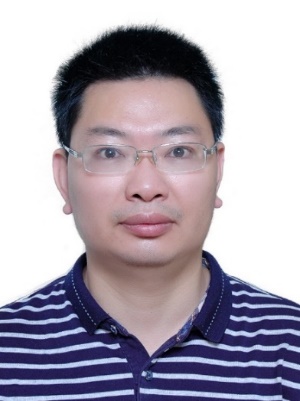
報告地點:信息樓自動化學院310報告廳
騰訊會議(ID: 555-2655-9115,會議密碼:220622)
報告人:袁小芳,湖南大學教授
報告題目:智能駕駛汽車三維路徑規(guī)劃方法研究
內容簡介:在傳統(tǒng)的汽車領域,通常考慮行駛距離來實現(xiàn)二維地圖的路徑規(guī)劃方法。本報告研究從三維地圖的角度提出應用于智能駕駛汽車的路徑規(guī)劃解決方案。對于三維地形上行駛的汽車,上坡行駛的能耗遠大于平路和下坡行駛的能耗,因而,綜合考慮行駛距離、能源消耗這兩個目標來設計一種三維地圖路徑規(guī)劃的代價函數(shù)。針對幾種路徑規(guī)劃情況,探討了基于智能優(yōu)化算法、深度學習算法來分別實現(xiàn)的一些路徑規(guī)劃方案,并在電動汽車和礦用車做了一些仿真驗證研究。
報告人簡介:袁小芳,博士,湖南大學電氣與信息工程學院教授、博士生導師,機器人視覺感知與控制技術國家工程研究中心研究員。從事智能自動化工程與應用、新能源汽車關鍵技術、機器人運動控制等領域的研究工作。先后主持國家重點研發(fā)計劃課題2項/任務1項、國家自然科學基金面上項目2項/青年項目1項、教育部博士點基金、中國博士后基金、湖南省科技計劃、湖南省自然科學基金等10余項科研課題,榮獲國家科技進步獎二等獎1項,湖南省自然科學二等獎、教育部科技進步二等獎等省部級獎勵6項,獲得授權發(fā)明專利12項,發(fā)表論文70多篇。
(二)
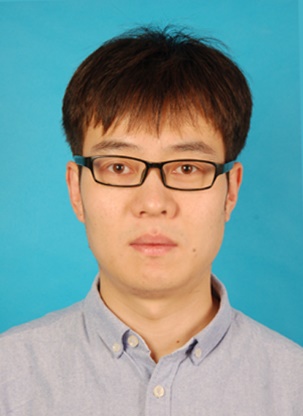
報告時間:6月23日(星期四)15: 00
報告地點:信息樓自動化學院310報告廳
騰訊會議(ID: 555-2655-9115,會議密碼:220622)
報告人:孫寧,南開大學教授
報告題目:欠驅動吊車軌跡規(guī)劃及非線性控制
內容簡介:吊車具有結構簡單、靈活度高、能耗低、重量輕等諸多優(yōu)點,被廣泛應用于建筑業(yè)、物流業(yè)、冶金業(yè)、制造業(yè)等領域,其主要任務是將貨物“快而準”地搬運至目標位置,并使貨物擺動盡可能地小。當前,在實際中應用的吊車大多依賴于人工操作,呈現(xiàn)出效率低、誤操作率高、安全系數(shù)低、事故率高等諸多不足。對于該類系統(tǒng),由于系統(tǒng)獨立的控制輸入個數(shù)少于待控自由度,且體現(xiàn)出強非線性特性,其“以少控多”的控制問題具有挑戰(zhàn)性,因此其控制研究具有理論與實際的雙重重要價值。在本報告中,報告人將匯報近年來在欠驅動吊車系統(tǒng)(橋式吊車、桅桿式吊車、塔式吊車、船用吊車等)的建模、規(guī)劃、控制等方面取得的一些研究成果,之后將介紹在其它類似機器人系統(tǒng)上進行的一些拓展研究情況。
報告人簡介:孫寧,南開大學人工智能學院教授、博導,教育部“青年長江學者”,南開大學“百名青年學科帶頭人”,IEEE Senior Member,曾獲日本學術振興會(JSPS)外籍特別研究員基金資助。從事機器人的智能控制與應用領域的教學和科研工作,主持國家自然科學基金(聯(lián)合基金)重點項目、國家重點研發(fā)計劃課題等10多個基金。獲多個期刊/會議的杰出/最佳論文獎、Machines 2021 Young Investigator Award、2021年中國產學研合作創(chuàng)新獎(個人)、2019年吳文俊人工智能優(yōu)秀青年獎、2019年中國智能制造十大科技進展(排名二)、天津市自然科學一等獎(排名二)、吳文俊人工智能自然科學一等獎(排名二)、2項天津市專利獎(分別排名一、二)、ICCAR 2022 Young Scientist Award等。擔任IEEE Transactions on Industrial Electronics, IET Cyber-Systems & Robotics, International Journal of Control, Automation, and Systems, Transactions of the Institute of Measurement and Control, Frontiers in Neurorobotics等期刊的編委,以及機器人與自動控制權威會議IEEE ICRA、IEEE IROS、ACC、IEEE CDC的編委。
(三)
報告時間:6月23日(星期四)15:30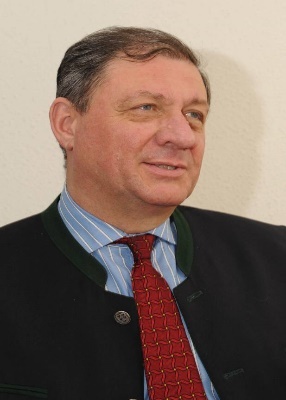
報告地點:信息樓自動化學院310報告廳
Zoom會議(ID: 925 1392 9633,Password: 220622)
報告人:László T. Kóczy, 匈牙利布達佩斯技術與經濟大學教授
報告題目:Discrete Bacterial Memetic Evolutionary Algorithms for solving high complexity problems
內容簡介:Evolutionary algorithms attempt to copy the solutions nature offers for solving (in the quasi-optimal sense) intractable problems, whose exact mathematical solution is impossible. The prototype of such algorithms is the Genetic Algorithm, which is, however rather slow and often does not find a sufficient solution. Nawa and Furuhashi proposed a more efficient modified one, under the name of Bacterial Evolutionary Algorithm (BEA). Moscato proposed the combination of evolutionary global search with nested local search based on traditional optimization techniques, and called the new approach memetic algorithm (MA).
We attempted to combine BEA first with Levenberg-Marquardt local search and we obtained very good results on a series of benchmarks. The next step was to apply the new type of MA for NP-hard discrete optimization, starting with the classic and well known Traveling Salesman Problem (TSP), applying discrete local search, and thus proposing the novel Discrete Bacterial Memetic Evolutionary Algorithm (DBMEA). Then, we continued with a series of related, but mathematically different graph search problems, applying the same approach. Although we could not improve the tailor made Helsgaun-Lin-Kernighan (HLK) heuristics for the basic TSP, we got comparably good results, and in some other problem cases, we obtained new, so far the best accuracy and running time combinations. The Traveling Repairman Problem is an eminent example, where DBMEA delivers the best solutions.
The advantages of the new approach are as follows:
- Rater general applicability. With minimal adaptation to the concrete problem type the same method could be successfully applied, there was no need to construct new tailor made algorithms for every new problem
- Predictability. Knowing the problem size, it was easy to give a good estimation of the running time, assuming a certain accuracy. This is not true for any of the other approaches, including the HLK, and especially not true for other methods, finding approximate solutions (often with large error)
In the talk, two examples will be presented with standard benchmarks going up to large numbers of graph nodes, and the DBMEA results will be compared with the best practices from the literature. The predictability feature will also be illustrated by a size-running time graph.
報告人簡介:László T. Kóczy received the M.Sc., M.Phil. and Ph.D. degrees from the Technical University of Budapest (BME) in 1975, 1976 and 1977, respectively; and the D.Sc. degree from the Hungarian Academy of Science in 1998. He spent his career at BME until 2001, and from 2002 at Szechenyi Istvan University (Gyor, SZE). He has been from 2002 to 2011 Dean of Engineering and from 2013 to current President of the University Research Council and of the University Ph.D. Council. From 2012 he has been a member of the Hungarian Accreditation Committee (for higher education), appointed by the Prime Minister, and elected Chair of the Engineering and Computer Science sub-committee, member of the Professors and Ph.D. sub-committee, and has been a member of the National Doctoral Council since 2012. He has been a visiting professor in Australia (ANU, UNSW, Murdoch and Deakin), in Japan (TIT, being LIFE Endowed Fuzzy Theory Chair Professor), in Korea (POSTECH),Poland AGH University, Austria (J. Kepler U.), and Italy (U. of Trento), etc. His research interests are fuzzy systems, evolutionary and memetic algorithms and neural networks as well as applications. He has published over 890 articles, most of those being refereed papers, and several text books and numerous edited volumes on the subject. His Hirsch-index is 41 by Google Scholar (based on ~71350 citations there).
His main results are: he did introduce the concept of rule interpolation in sparse fuzzy models, and hierarchical interpolative fuzzy systems, fuzzy Hough transform, and also fuzzy signatures and fuzzy situational maps, further fuzzy signature state machines among others. He also proposed a family of memetic algorithms (Bacterial Memetic Algorithm, Discrete Bacterial Memetic Algorithm) which, among others, provides the best solutions to the Minimum Latency Traveling Salesman Problem. His research interests include applications of CI for telecommunication, transportation and logistics, vehicles and mobile robots, control, information retrieval, etc.
He was Lead Guest Editor at Complexity and is now at Algorithms and Symmetry. He was an Associate Editor of IEEE TFS for several periods, and is now AE of Fuzzy Sets and Systems, Int. Journal of Fuzzy Systems, Journal of Advanced Computational Intelligence, Int. J. of Fuzzy Systems, Soft Computing, etc. He is a Fellow of IFSA, of ISME and of the Hungarian Academy of Engineering. He was the founding President and is now the Life Honorary President of the Hungarian Fuzzy Association, was President, etc. of IFSA, AdCom member of IEEE CIS, and of IEEE Systems Council, etc.
He is a member of the St. Stephan Academy of Science (2016), and for in member of the Polish Academy of Science (2017). He is the 2020 recipient of the IEEE Fuzzy Pioneer Award.